

Why Every Man Responds Differently to Erotic Touch
Understanding Male Anatomy, Sensitivity and the Value of Learning
By Colin Richards
For many years, male sexuality has been treated as though every man responds in exactly the same way. Popular culture often portrays men as simple creatures who are always ready for sex and who all enjoy the same type of stimulation.
Nothing could be further from the truth.
During more than twenty years working professionally in psychosexual education and sensual massage, I have met thousands of men from every age and background. One of the greatest lessons they have taught me is that every penis, every body and every mind is different.
Just as every woman experiences pleasure differently, so does every man.
That is why I believe education is far more valuable than assumption.
Understanding Male Anatomy
A basic understanding of anatomy helps explain why different men experience touch differently.
Main structures of the penis
- Glans (head of the penis)
- Corona (ridge beneath the glans)
- Frenulum (underside attachment of the foreskin, often highly sensitive)
- Shaft
- Foreskin (where present)
- Urethral opening (meatus)
- Corpora cavernosa (paired erectile bodies)
- Corpus spongiosum (surrounding the urethra)
- Scrotum and testes
Each of these structures varies slightly from one individual to another, and sensitivity can differ enormously.

Circumcision and Sensitivity
Circumcision is one of the biggest reasons why men describe different sensations.
A fully circumcised man has lived with the glans permanently exposed, often resulting in a different pattern of sensitivity than someone whose glans remains protected by a foreskin.
An uncircumcised man may have a foreskin that retracts easily, partially or very little at all. Every variation creates a slightly different sensory experience.
Rather than assuming what someone will enjoy, the most valuable approach is simply to communicate and remain curious about what feels comfortable for that individual.
Conditions Worth Understanding
There are also several common medical conditions that can influence comfort and confidence.
Phimosis is where the foreskin cannot comfortably retract over the glans. Some cases resolve naturally while others may benefit from medical treatment.
Hypospadias is a congenital variation where the urethral opening is located on the underside of the penis rather than at the tip. Many men have normal sexual function but may have understandable concerns about appearance.
Peyronie’s disease develops when scar tissue forms within the penis, creating curvature during erection that may cause discomfort or make intercourse more difficult. Modern treatments are available and should be discussed with a healthcare professional.
Understanding these conditions allows partners to approach intimacy with greater empathy rather than misunderstanding.

Every Penis Is Different
Penile size, shape and sensitivity vary enormously.
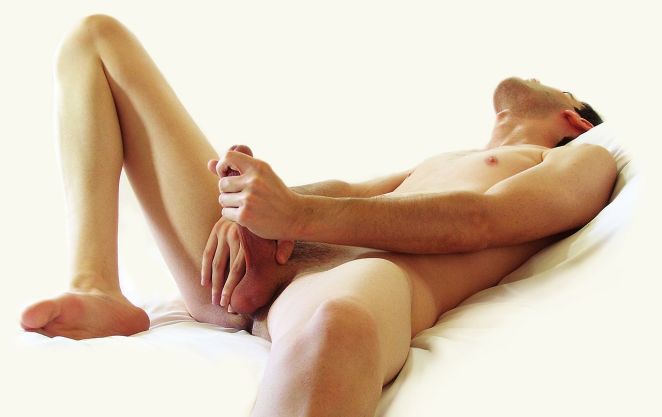
Men with smaller penises often develop ways of touching themselves that simply suit their own anatomy. Some find that using their fingertips rather than enclosing the penis within a full grip feels more comfortable and gives them greater control. Others prefer different hand positions or movements that reflect their individual sensitivity.
These are simply examples of how people naturally adapt to their own bodies. There is no single “correct” way to experience pleasure.
The Mind Is Also Mans Biggest Sexual Organ
Perhaps the biggest surprise for many people is that arousal begins in the brain.
Feeling accepted.
Feeling desired.
Feeling relaxed.
Feeling free from judgement.
These psychological factors often influence sexual enjoyment just as much as physical sensation.
Simple things such as maintaining warm eye contact, slowing down, breathing together and communicating openly can transform the quality of intimacy because they help calm the nervous system and build trust.
Learning Rather Than Guessing
One of the reasons I established the School of Sensual Massage was because so many people told me they had never been shown how to understand another person’s body with confidence and sensitivity.
Most of us receive almost no practical education about intimacy. We are expected to “just know.”
Instead, we often learn through trial and error, pornography, myths or awkward conversations.
Education offers something very different.
It provides understanding.

It replaces anxiety with confidence.
It encourages communication rather than performance.
Massage My Man
Learning as a Woman
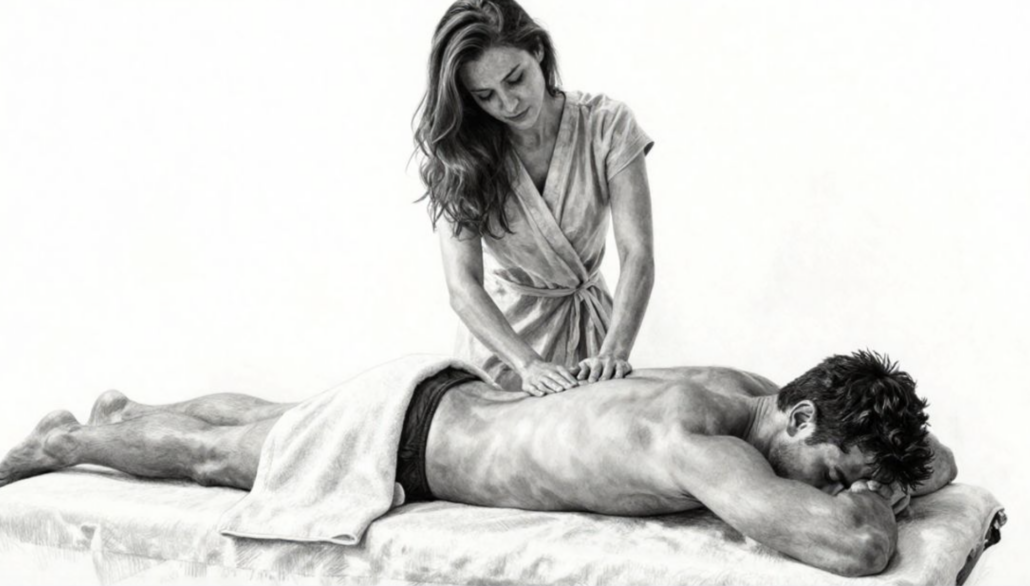
The Massage My Man Foundation and Intermediate Courses are designed for women who would like to better understand male anatomy, arousal, communication and sensual touch in a relaxed educational environment.
Rather than focusing on performance, the courses explore how to build anticipation, recognise differences in male sensitivity, understand common anatomical variations and appreciate why every man responds differently.
As students progress through the programme, they also learn about topics such as male sexual response, edging as a concept of arousal awareness, and ways of helping a partner become more mindful of his body rather than rushing towards climax. The emphasis throughout is on consent, communication, observation and adapting to the individual rather than following a fixed routine.
Whether a woman wishes simply to become a more confident lover or deepen intimacy within a long-term relationship, the course provides practical education alongside a much greater understanding of male psychology.
Touch & Turn On
Men Learning About Men
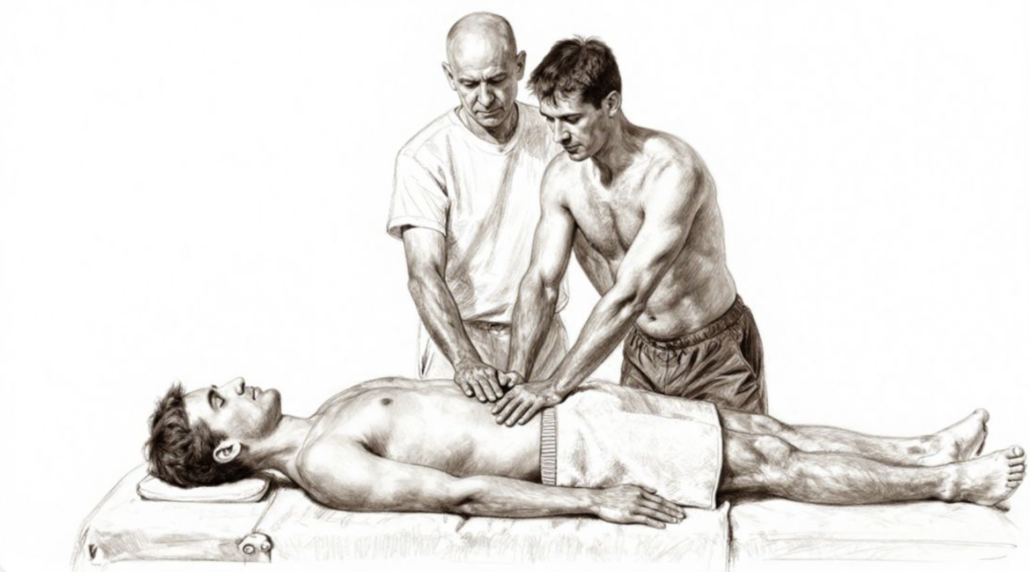
The Touch & Turn On Courses were developed for men who want to understand male intimacy in a supportive, educational setting.
Some students are gay, bisexual or bi-curious. Others are heterosexual men who simply want to become more comfortable with the male body, reduce anxiety, or explore giving and receiving touch within clearly agreed boundaries.
Like all School of Sensual Massage training, the emphasis is educational rather than performative.
Students learn about male anatomy, communication, body confidence, relaxation, sensual massage, consent, emotional awareness and understanding the wide diversity of male responses.
As confidence develops, the programme also discusses subjects such as masturbation, edging and orgasm from an educational perspective, helping students appreciate how different men experience arousal and why observation and communication are more valuable than assuming everyone enjoys the same experience.
The Greatest Skill of All
After thousands of appointments and many years teaching, my conclusion remains remarkably simple.
The greatest intimate skill is not learning one perfect technique.
It is learning to observe.
To listen.
To ask.
To adapt.
Every man arrives with a different body, different experiences and a different story.
When we approach intimacy with curiosity instead of assumptions, we stop trying to “perform” and start learning about the person in front of us.
That, in my experience, is where genuine confidence—and genuine intimacy—really begins.

